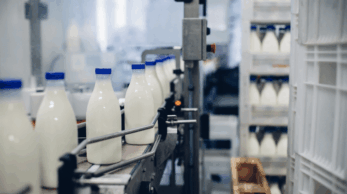
In the context of maintenance in food industry companies, bottling lines are among the environments most sensitive to unplanned stoppages. A halt of just a few minutes is enough to severely degrade industrial performance. At throughputs that can exceed 15,000 to 20,000 bottles per hour, every malfunction immediately translates into lost production, rejects and increased pressure on maintenance teams.
Yet, in the majority of cases these breakdowns are neither unpredictable nor new. They are often linked to assets already identified as sensitive, but insufficiently monitored, documented or anticipated. Sustainable reduction of stoppages therefore depends less on increased reactivity and more on structured maintenance driven by data.
Key takeaways
- In food industry plants, unplanned stoppages are often linked to recurring failures already experienced.
- Effective maintenance relies on identifying critical assets and on preventive maintenance plans adapted to actual production conditions, throughputs and hygiene constraints.
- Centralising maintenance information in a CMMS such as DimoMaint is essential to analyse root causes, prioritise actions and sustainably reduce the impact of failures on OEE.
- Field access to maintenance data improves team responsiveness, makes interventions more reliable and supports decision-making, including in emergency situations.
- Driven by data, maintenance becomes a lever for long-term industrial performance, contributing to regulatory compliance, stable throughputs and the plant’s overall competitiveness.
Why are bottling lines exposed to unplanned stoppages?
Failures linked to technical complexity
A bottling line relies on a continuous sequence of assets: fillers, cappers, labelers, conveyors, case packers and palletizers. The failure of a single link causes the entire line to stop. This interdependence amplifies the impact of every incident.
Added to this are sector-specific constraints:
- high throughputs and continuous operation,
- humid, sometimes corrosive environments,
- strict hygiene requirements related to IFS, BRC or ISO 22000 standards.
These conditions accelerate component wear and reduce margins for error in settings and cleaning operations.
The most frequent failures in bottling
Based on field feedback from the food industry and sector studies, unplanned stoppages are often caused by the same issues: mechanical failures, electrical faults, supply problems or errors in settings or cleaning.
Without reliable histories or structured analysis, these failures are often treated as isolated incidents, whereas they reveal recurring weaknesses in the process or in maintenance organisation.
A tracking tool and a formalised feedback loop make it possible to identify the real causes and better anticipate them.
|
Failure type |
On-site symptom |
Risk |
Leverage via CMMS |
|
Faulty sensors |
Unexpected stops, PLC faults |
OEE degradation |
Failure history + standardised settings |
|
Conveyor jams |
Bottle accumulation |
Complete line stoppage |
Cleaning procedures + scheduled checks |
|
Consumable shortages |
Line stopped despite equipment OK |
Direct capacity loss |
Stock monitoring and alerts |
Unplanned stoppages have impacts far beyond maintenance
The direct cost of a stoppage is well known: lost production volume, overtime, emergency repairs. But indirect impacts are equally critical:
- OEE degradation,
- delivery delays and tensions with customers or distributors,
- overload on maintenance teams,
- conflicts between production, quality and maintenance.
According to several industry studies, unplanned stoppages can represent up to 5 to 10% of lost production capacity. In a context of tight margins, this loss is hard to accept without a structural response.

How to structure effective maintenance to prevent critical failures?
When unplanned stoppages become recurrent, the problem is not only technical. It is often organisational. In many bottling plants, maintenance still depends too much on emergencies, individual experience and tools ill-suited to the complexity of the installations.
Signs that maintenance on a bottling line is still too reactive:
- recurring failures are “known” but not documented,
- key settings rely on the experience of a few technicians,
- preventive interventions are often postponed to maintain production,
- OEE indicators are analysed without linkage to technical causes.
These signs generally indicate the absence of structured maintenance management.
1. Move away from instinct-driven maintenance
Excel sheets, paper logs, technicians’ memory: these practices were long enough in less automated environments. But on modern bottling lines, with high throughputs and interconnectivity, they quickly show their limits.
2. Build a targeted preventive maintenance plan
Effective maintenance in bottling relies on clear prioritisation:
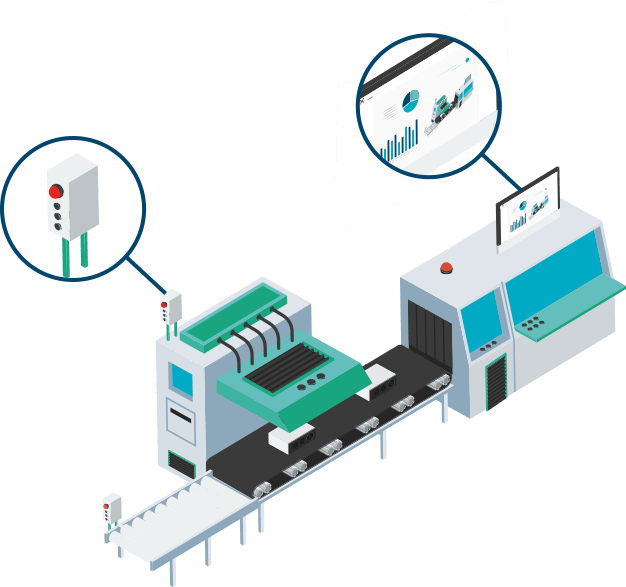
- Identify critical assets, those whose failure causes an immediate line stoppage,
- Adapt maintenance frequencies to actual throughputs and operating conditions,
- Standardise intervention procedures (settings, cleaning, checks),
- Integrate quality and hygiene constraints, so maintenance actions fully comply with IFS, BRC or ISO 22000 requirements.
This structure reduces emergency interventions, which are often longer and more costly, and evens out the team workload over time.
3. Better plan and coordinate interventions
Reducing stoppages also requires rigorous organisation:
- prioritise requests by production and quality impact,
- realistic planning aligned with scheduled downtimes,
- close coordination between maintenance, production and quality,
- structured monitoring of subcontractors and costs.
Better-organised maintenance reduces operational stress and frees time for higher-value actions.
How does a CMMS concretely improve the reliability of bottling equipment?
Centralise information to manage reliability
The CMMS becomes a key tool once maintenance is structured. It centralises all data: failures, interventions, replaced parts, downtime durations, personnel involved.
This traceability makes it possible to:
- analyse recurring failures,
- track MTTR and line availability,
- measure maintenance costs by asset,
- prepare quality audits reliably.
On a bottling line, these indicators allow precise identification of the machines degrading OEE and guide corrective actions.
CMMS and mobility: improve field responsiveness
Mobile access to the CMMS transforms the daily work of maintenance teams:
- immediate reporting of failures,
- access to histories and procedures directly on the shop floor,
- real-time entry of interventions.
This mobility makes information more reliable, reduces omissions and improves intervention quality, even in emergencies.
This field approach is illustrated by the experience feedback from DMD, a manufacturer facing complex installations and high availability requirements.
« The primary goal of maintenance is of course service continuity. It therefore needed monitoring indicators about failures and production stoppages. In addition, the group is undergoing certification for the British IFS BRC standard – one of the most demanding for bottling – which requires fine traceability of maintenance operations, products, time records, as well as stock management and all types of intervention. »
This approach reduces omissions, secures interventions and enables technicians to make informed decisions, even in emergencies.

From reactive maintenance to managed maintenance
By using consolidated data, maintenance managers can:
- adjust maintenance plans based on field feedback,
- prioritise investments on the most penalising assets,
- objectify technical and budgetary decisions.
The CMMS thus becomes a decision-support tool, not just a recording system.
The testimonial from Schenk illustrates this transition to data-driven maintenance.
“The CMMS allowed us to structure our maintenance and, above all, to better analyse recurring failures. We gained visibility on our critical assets, which today helps us prioritise actions and make more rational decisions based on facts.”
Embed maintenance in long-term industrial performance
Improving reliability of bottling lines is not limited to short-term failure reduction. Data-driven maintenance follows a continuous improvement logic:
- capitalise on feedback,
- standardise best practices,
- progressively reduce performance variability,
- better control regulatory and hygiene requirements.
The traceability provided by the CMMS facilitates compliance with IFS, BRC and ISO 22000 standards, while securing product quality and the plant’s industrial credibility.
Towards predictive maintenance in bottling plants
Once preventive maintenance is structured and data is reliable, some bottling plants can progressively go further by adopting predictive maintenance. The goal is no longer just to act at fixed intervals, but to anticipate failures based on actual asset behaviour.
On critical machines such as fillers, conveyors or dosing systems, analysing failure histories, downtime, setting drifts or parts consumption makes it possible to detect weak signals that precede malfunctions. This approach relies above all on the quality and structure of maintenance data.
The predictive maintenance does not replace existing practices but complements them. It is implemented progressively, enabled by a CMMS capable of centralising information, analysing trends and providing reliable indicators. In a high-throughput bottling environment, it helps reduce the most penalising unplanned stoppages and secures line availability in the long term.
By structuring maintenance and relying on a suitable CMMS, maintenance managers turn field data into levers for reliability, performance and compliance. Maintenance then stops being a reactive cost centre and becomes a key factor of stability and industrial competitiveness.