Sommaire
Every unplanned breakdown costs money. Every missed inspection creates risk. And yet, industrial maintenance mistakes remain one of the most preventable causes of production loss across industrial facilities worldwide.
More than two-thirds of industrial businesses experience at least one unplanned outage every month. Most trace back to the same recurring errors in planning, diagnostics, or preventive care. Left unchecked, these mistakes drive up maintenance costs, compromise equipment health, and put worker safety at risk.
The good news: they are avoidable. This article walks through 10 of the most common industrial maintenance mistakes, explains why they happen, and shows what maintenance strategies actually fix them.
Why Industrial Maintenance Mistakes Are So Costly
Industrial maintenance sustains or restores assets to conditions that optimize safety and performance. It is divided into two categories. Preventive maintenance anticipates breakdowns to extend the life cycle of machinery. Corrective maintenance comes into play after incidents to repair or replace damaged parts.
This sector represents a significant strategic challenge for businesses. It helps reduce costs, enhance quality, meet environmental standards, and satisfy customers.
21% of businesses still run a run-to-failure strategy, intentionally allowing equipment to operate until it fails. This increases the risk of costly repairs, unplanned downtime, and serious safety incidents.
A proactive maintenance approach changes this. Instead of waiting for breakdown maintenance to become unavoidable, maintenance teams can minimize downtime and protect equipment health through planning and early intervention.
Diagnostic Errors and Their Consequences
Two frequent industrial maintenance mistakes can jeopardize the accuracy of diagnostics. Here is how predictive technology can be crucial in preventing them.
Mistake 1: Making an Incorrect Diagnosis
An inaccurate diagnosis occurs when the cause of a failure or wear is wrongly attributed to equipment. This can stem from a lack of knowledge, misinterpretation of real-time data, confusion between symptoms and actual causes, or overlooked environmental factors.
The repercussions are significant. An incorrect diagnosis can lead to extended equipment downtime, unnecessary or ineffective repairs, worsening failures, and loss of customer trust. For expensive equipment, the cost of a wrong diagnosis compounds fast.
Mistake 2: Overlooking Warning Signs
Failure to recognize signals indicating an imminent malfunction is another critical error. This mistake can result from inadequate monitoring, poor quality data, lack of proper alerts, or underestimating risks.
The consequences of ignoring these warning signs can be severe: unexpected outages, major malfunctions, jeopardized safety, or loss of competitive edge. Research confirms that minor problems routinely escalate into major failures when early indicators go unaddressed.
How to Avoid Both: Use Predictive Maintenance Strategies
Predictive maintenance uses data analysis, machine learning, and AI to forecast potential equipment failures before they occur. The benefits include detecting early warning signals, pinpointing true causes, forecasting maintenance needs, and optimizing interventions.
AI is increasingly used in maintenance for data summarization and root cause analysis. This improves equipment performance and contributes to cost reduction, improved equipment availability, and better customer satisfaction.
Want to reduce unexpected failures at your facility? Talk to a DimoMaint specialist about building a predictive and preventive maintenance program.
Errors in Planning and Executing Maintenance Tasks

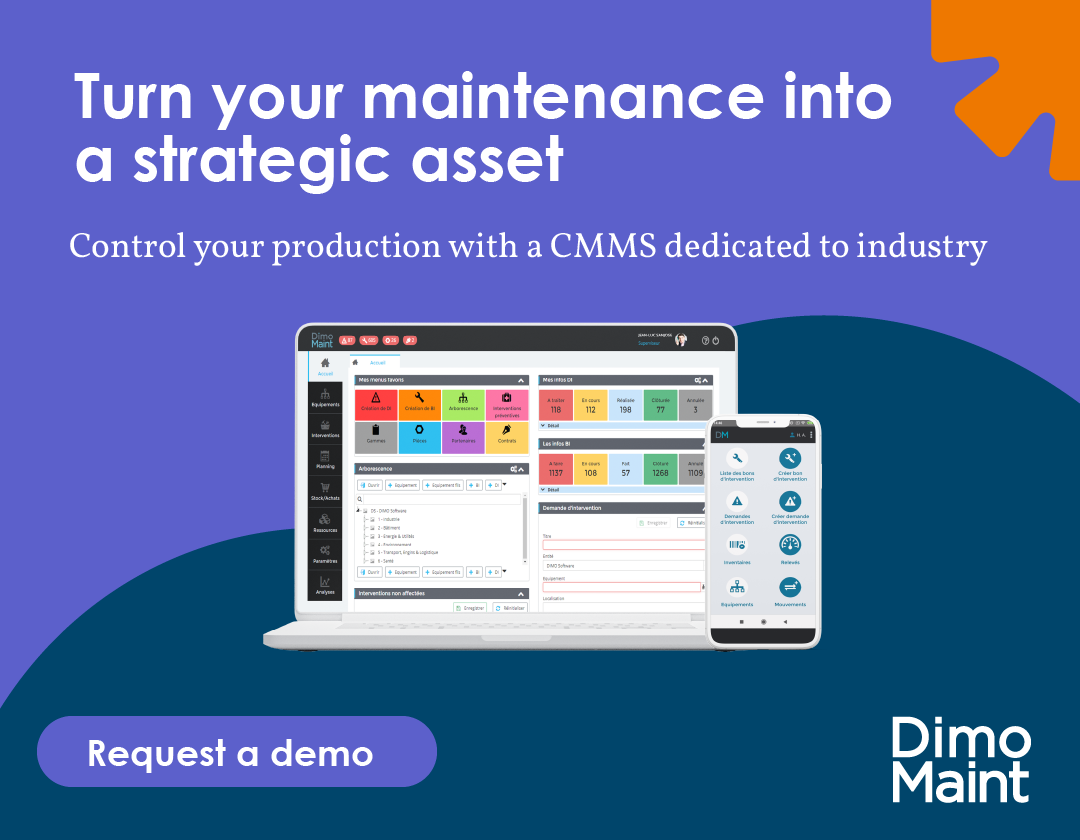
These four common mistakes affect the planning and execution of maintenance operations. A computerized maintenance management system (CMMS) supports the Total Productive Maintenance (TPM) strategy, which aims at production optimization. Effective management strategies and ongoing training can prevent these errors.
Mistake 3: Insufficient Planning
Insufficient planning is characterized by a lack of clear definition regarding goals, resources, timelines, procedures, and responsibilities. Multiple factors can cause this: poor communication, inaccurate needs assessment, absence of suitable tools, or unpredictability.
The consequences are last-minute work, time pressure, interruptions, missed deadlines, and a loss of effectiveness and productivity. Without a detailed maintenance plan, maintenance teams have no reliable way to track progress or prioritize work.
Mistake 4: Poor Task Prioritization
Poor task prioritization stems from an inability to order operations based on importance, urgency, impact, and feasibility. Insufficient criteria, confusion of priorities, pressure from external demands, or neglecting risks can all lead to this.
The risks include quality deterioration, increased costs, non-compliance with industry standards, and customer dissatisfaction. Critical assets are often the ones that suffer most when prioritization fails.
Mistake 5: Lacking Documentation and Follow-up
Failing to document and follow up on maintenance activities means the absence of consistent recording, updating, sharing, and analyzing of maintenance information. This may result from a lack of time, poor organization, or suitable tools.
Deploying a CMMS is an essential solution for recording and tracking all interventions. Detailed records allow maintenance teams to track maintenance history, identify recurring problems, and support continuous improvement initiatives. Without proper documentation, the same maintenance issues tend to repeat.
Mistake 6: Overlooking Team Training and Expertise
Overlooking team training means failing to develop, coach, and enhance the skills of maintenance technicians. This omission can be due to budget constraints, no training policy, or ignorance of actual needs.
According to MaintainX’s 2024 State of Industrial Maintenance report, 60% of organizations identified skilled labor shortages as the leading challenge to improving their maintenance programs. The impacts are declining motivation, increased turnover, reduced performance, and a loss of competitiveness.
How to Prevent Planning and Execution Errors
Preventing these mistakes requires management strategies and ongoing training. The key steps are:
- Establish a clear maintenance policy aligned with company objectives
- Use proper tools for planning, documenting, tracking, and assessing maintenance activities
- Set clear criteria for task prioritization based on asset criticality and develop reliable performance indicators
- Actively involve all internal and external stakeholders, encouraging effective communication
- Invest in ongoing training, coaching, and skill development of maintenance technicians
These strategies lead to resource optimization, quality improvement, cost reduction, compliance with standards, and increased customer satisfaction.
Ready to structure your maintenance processes? Speak with a DimoMaint specialist to see how a CMMS supports better planning and execution.
Common Industrial Maintenance Mistakes Around Preventive Care
These four mistakes affect the quality of preventive maintenance and industrial equipment upkeep. Adopting an effective preventive maintenance program is the main way to avoid them.
Mistake 7: Neglecting Preventive Maintenance
Omitting routine inspections, adjustments, cleanings, lubrications, replacements, or tests on industrial equipment is a serious mistake. This issue may arise from lack of time, budget, qualified staff, appropriate tools, or proper planning.
Nearly 60% of organizations allocate less than half of their maintenance time to scheduled preventive work, often defaulting to reactive habits. The consequences include premature equipment wear, unexpected failures, performance loss, increased energy consumption, and compliance violations. Neglecting preventive maintenance practices is one of the fastest ways to turn a manageable maintenance issue into costly downtime.
Mistake 8: Incorrect Use of Equipment
Disregarding procedures for operating, handling, storing, transporting, or protecting equipment, either through misuse or negligence, can lead to serious consequences. This can be due to a lack of training, awareness, supervision, motivation, or discipline.
Damaging effects include material deterioration and contamination, breakage, serious harm to workers, and even sanctions. Following manufacturer recommendations for equipment use is a basic but often overlooked maintenance practice.
Mistake 9: Underestimating the Importance of Cleaning and Lubrication
Failing to emphasize the necessity of cleaning and proper lubrication can severely impact the functioning of industrial equipment. This problem may stem from ignorance, negligence, ineffective routines, short-term savings, or carelessness.
According to component manufacturers, improper lubrication leads to 43% of mechanical failures and 70% of equipment failures. Neglecting cleaning and lubrication leads to dirt accumulation, corrosion, increased friction and overheating, and accelerated machinery wear. Keeping equipment running smoothly depends on getting these basics right.
Mistake 10: Ignoring Modernization and Technological Updates
Not taking advantage of technological innovations and sector advancements can lead to serious issues for industrial equipment. This could result from a lack of technological monitoring, vision, means, skills, or adaptability.
The consequences include obsolescence, competitive disadvantage, increased vulnerability, compatibility issues, and market exclusion. Outdated tools also reduce operational efficiency and make it harder for maintenance teams to track maintenance history and act on real-time data.
How to Avoid These Mistakes: Adopt a Strong Preventive Maintenance Program
A solid preventive maintenance program is key to avoiding these mistakes. A fundamental component is employing a CMMS solution, which effectively supports TPM principles and helps coordinate and automate preventive maintenance activities.
This program acts as a comprehensive roadmap. It outlines standardized procedures for each type of equipment, follows manufacturer recommendations, and details the roles of each participant in the maintenance process. This ensures consistent and systematic operations every time, keeping industrial facilities running smoothly and guaranteeing the safety and reliability of the equipment fleet.
Cost effectiveness improves significantly when a proactive approach replaces reactive firefighting. A well-structured maintenance plan protects critical assets, reduces unexpected breakdowns, and improves overall operational efficiency.
Looking to build a stronger preventive maintenance program? Contact a DimoMaint specialist to find the right solution for your facility.
Quick Reference: 10 Industrial Maintenance Mistakes to Avoid
|
# |
Mistake |
Core Risk |
|---|---|---|
|
1 |
Incorrect diagnosis |
Wasted repairs, worsening failures |
|
2 |
Ignoring warning signs |
Unexpected outages, safety incidents |
|
3 |
Insufficient planning |
Rushed work, missed deadlines |
|
4 |
Poor task prioritization |
Missed critical work, increased costs |
|
5 |
Lacking documentation |
Recurring problems, no improvement |
|
6 |
Neglecting team training |
Errors, inconsistency, safety risk |
|
7 |
Skipping preventive maintenance |
Accelerated wear, compliance issues |
|
8 |
Incorrect equipment use |
Physical damage, serious harm |
|
9 |
Poor cleaning and lubrication |
Overheating, accelerated asset wear |
|
10 |
Ignoring modernization |
Obsolescence, rising maintenance costs |
These 10 industrial maintenance mistakes touch on diagnostics, planning, execution, upkeep, and equipment. They can significantly affect production, quality, safety, and profitability. Embracing predictive technology, implementing management strategies and ongoing training, and adopting a robust preventive maintenance program are the clearest paths to avoiding them.
Want to learn more? Contact DimoMaint right away.