
In an environment where data management, operational efficiency, and cost control are critical, facility management teams must optimise their processes to remain competitive.
Manual workflows, scattered information, and lack of visibility often lead to inefficiencies, increased workload, and higher operational risks.
The implementation of a CAFM (Computer-Aided Facility Management) solution enables organisations to structure their operations, centralise their data, and streamline their maintenance processes.
7 key ways CAFM automation helps free up time and improve
1. Streamlined Work Order Management
Manual work order management is time-consuming and prone to errors.
With CAFM automation:
- work orders are created, assigned, and tracked automatically
- tasks are routed to the right teams
- progress is monitored in real time
This improves coordination, reduces delays, and ensures better traceability of operations.
2. Proactive Preventive Maintenance
Reactive maintenance leads to higher costs and increased downtime.
A CAFM ystem enables:
- automatic scheduling of preventive tasks
- alerts for inspections and compliance checks
- better planning of maintenance activities
By adopting a proactive approach, organisations can:
- extend asset lifespan
- reduce breakdowns
- optimise maintenance budgets
3. Centralised Asset Management and Tracking
Managing assets without a structured system limits visibility and control.
With CAFM automation:
- asset data is centralised and secured
- maintenance history is accessible in real time
- performance tracking is simplified
This improves decision-making regarding repair, replacement, and lifecycle management.
4. Optimised Inventory Management
Inventory mismanagement can lead to unnecessary costs and operational delays.
A CAFM solution allows you to:
- track stock levels in real time
- automate replenishment alerts
- reduce overstocking and shortages
This ensures better resource management and cost control.
5. Data-Driven Decision-Making
Data is a key asset in modern facility management.
A CAFM system enables:
- real-time dashboards
- automated reporting
- KPI tracking and analysis
This allows facility managers to:
- identify inefficiencies
- optimise processes
- justify budgets with accurate data
6. Empowering Mobile Teams
Field teams need access to information at any time.
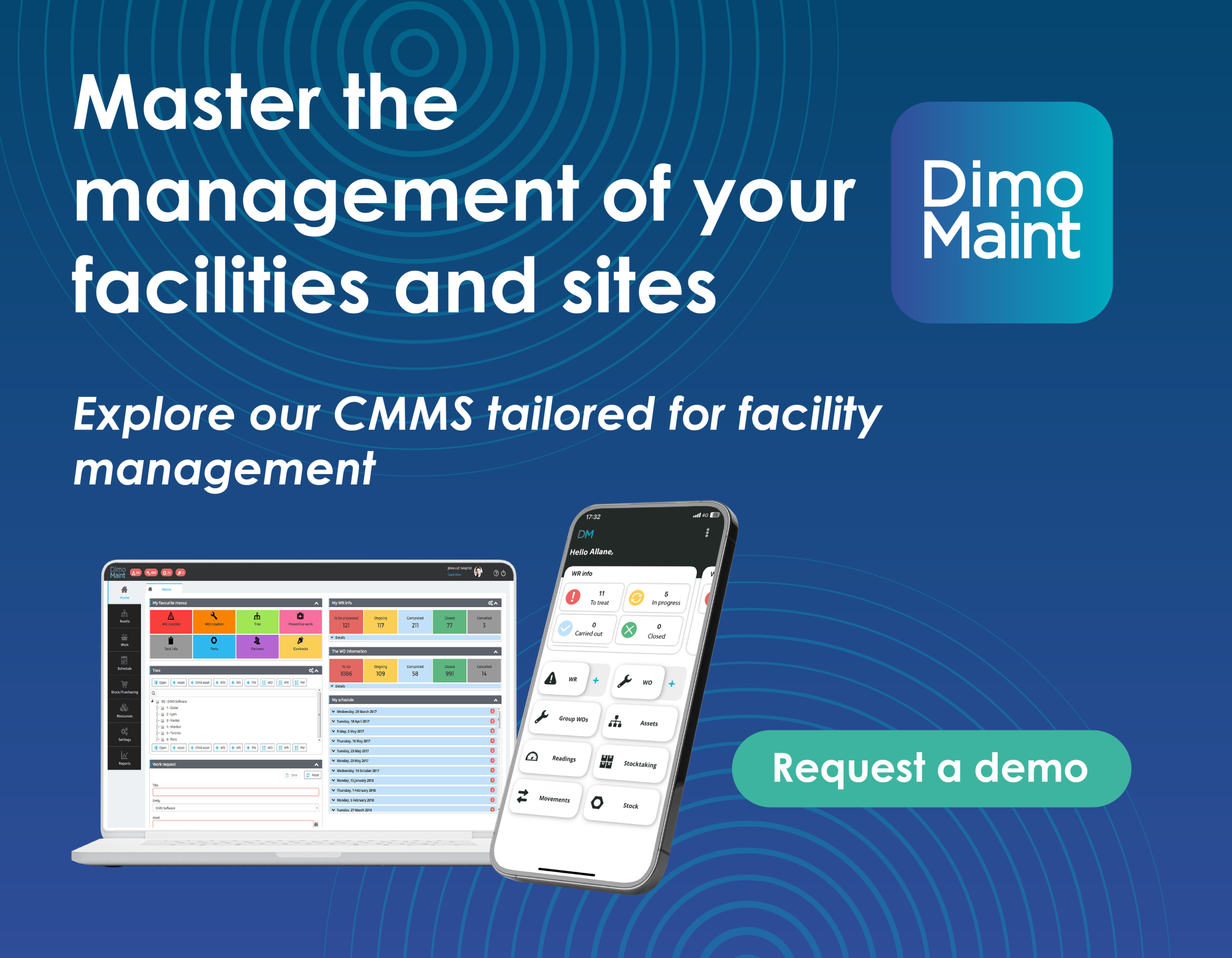
With a mobile-enabled CAFM system:
- technicians can access work orders on-site
- updates are made in real time
- communication between teams is improved
This reduces administrative tasks and improves responsiveness.
7. Simplified Contractor Management
Managing external service providers can be complex without proper tools.
CAFM automation helps:
- centralise contractor information
- track performance and interventions
- automate communication and follow-ups
This improves service quality while reducing administrative workload.
CAFM Automation as a Strategic Lever
CAFM is no longer optional – it is a key lever for improving efficiency, data management, and operational performance.
A solution like DimoMaint FM enables organisations to structure their operations and significantly reduce workload while improving decision-making.
Discover DimoMaint FM and transform your facility management with a powerful CAFM solution.