
Sommaire
Buildings account for a significant share of global carbon emissions, with approximately 25% of emissions linked to the built environment. As a result, facility managers are under increasing pressure to reduce the environmental impact of their operations while maintaining performance and cost control.
In this context, digital tools such as CAFM (Computer-Aided Facility Management) systems play a key role. By centralising data, monitoring energy usage, and optimising maintenance, CAFM solutions enable organisations to take a structured and measurable approach to reducing their carbon footprint.
Seven practical strategies to support carbon reduction in commercial buildings.
1. Improve Energy Efficiency and Consumption Control
Optimising energy usage is one of the most effective ways to reduce emissions.
Key actions include:
- conducting energy audits to identify inefficiencies
- implementing energy-efficient lighting and sensors
- optimising HVAC system performance
- ensuring assets are properly maintained
- using smart building technologies and IoT sensors for real-time monitoring
Regular inspections and performance tracking allow organisations to adjust consumption and meet energy reduction targets.
2. Integrate Renewable Energy Sources
Transitioning to renewable energy is essential for long-term carbon reduction.
Options include:
- installing solar panels on rooftops or façades
- using wind energy where feasible
- implementing geothermal heating and cooling systems
- sourcing green electricity from renewable providers
Integrating sustainability criteria into asset purchasing decisions also contributes to reducing emissions over time.
3. Implement Carbon Offset Strategies
Even with optimised operations, some emissions remain unavoidable.
Organisations can:
- measure their carbon footprint
- invest in certified offset programmes (reforestation, renewable energy, etc.)
This helps balance emissions while supporting environmental initiatives.
4. Optimise Waste Management
Reducing waste contributes directly to lowering environmental impact.
Best practices include:
- minimising waste during operations and maintenance
- implementing recycling programmes
- using reusable and recyclable materials
- adopting a zero-waste approach where possible
Structured processes improve both sustainability and operational efficiency.
5. Improve Water Efficiency
Water management is another key lever for reducing environmental impact.
Actions include:
- installing water-efficient equipment
- implementing water recycling systems
- managing stormwater through sustainable infrastructure
Reducing water consumption also contributes to lowering energy usage linked to water treatment and distribution.
6. Encourage Behavioural Change
Technology alone is not enough—people play a crucial role.
Facility managers should:
- raise awareness of sustainability practices
- encourage energy-saving behaviours
- promote sustainable commuting options
- optimise space usage (remote work, space consolidation)
Employee engagement significantly enhances the impact of sustainability initiatives.
7. Use Data to Drive Continuous Improvement
Accurate data is essential to monitor progress and identify optimisation opportunities.
A CAFM system enables:
- real-time monitoring of energy and resource usage
- performance tracking through dashboards
- identification of inefficiencies and trends
- implementation of corrective actions
By leveraging data, organisations can continuously improve their environmental performance while controlling costs.
Combining Sustainability and Operational Performance
Reducing carbon emissions in commercial buildings requires a structured and long-term approach. By combining operational best practices, behavioural changes, and digital tools, organisations can significantly lower their environmental impact.
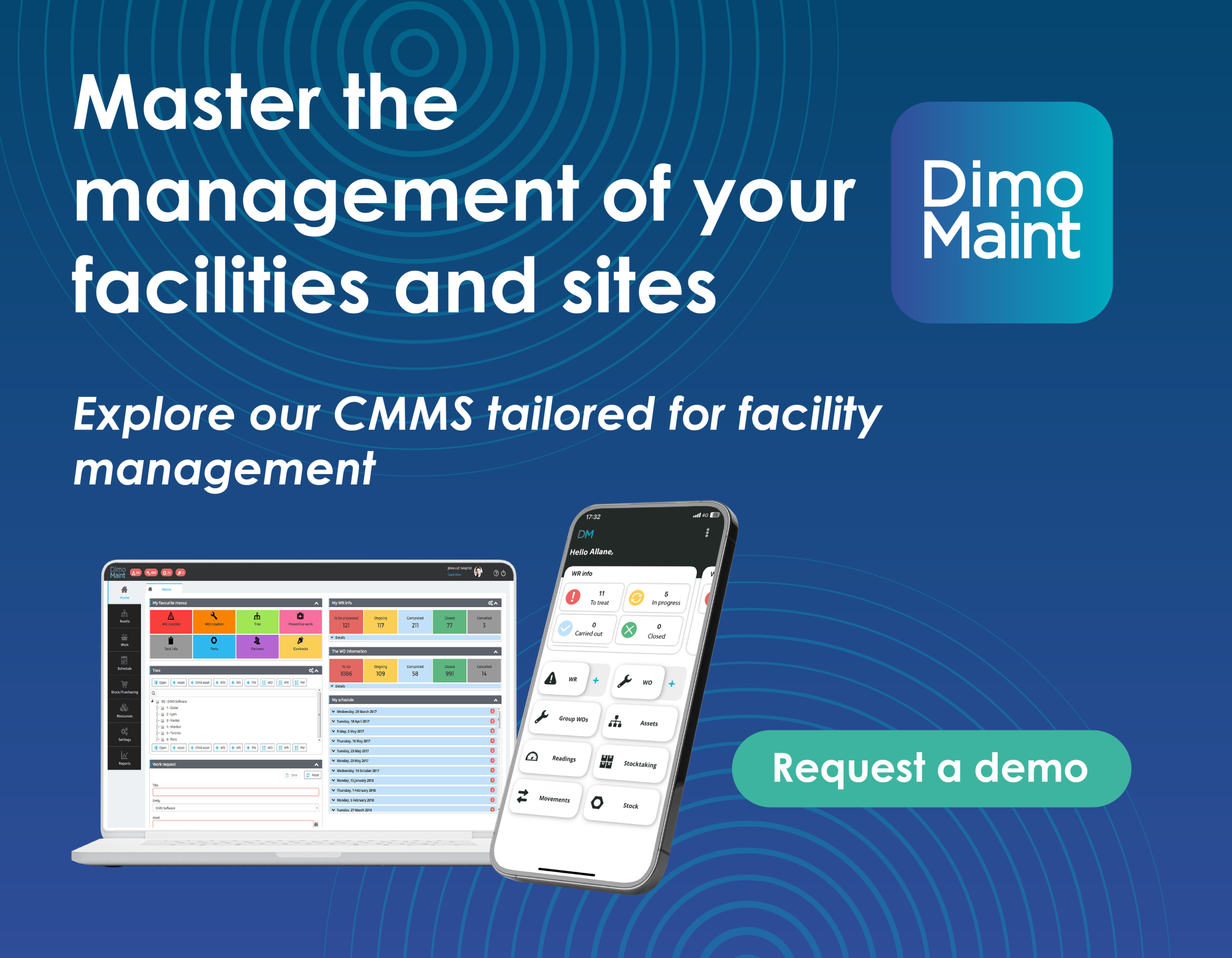
A CAFM solution, combined with a CMMS (GMAO) approach, enables organisations to:
- centralise environmental and operational data
- optimise maintenance and asset performance
- improve energy efficiency
- support sustainability objectives
Beyond environmental benefits, these strategies also deliver cost savings and long-term operational value.
FAQ: Reducing Carbon Emissions in Buildings
How can commercial buildings reduce carbon emissions?
Commercial buildings can reduce emissions by improving energy efficiency, using renewable energy, optimising maintenance, and leveraging data to monitor and reduce consumption.
What is the role of CAFM in sustainability?
A CAFM system helps centralise data, monitor energy usage, automate processes, and provide insights that support sustainable decision-making.
Why is maintenance important for reducing emissions?
Well-maintained equipment operates more efficiently, consumes less energy, and reduces the risk of breakdowns that can increase emissions.
What are the most effective energy-saving measures in buildings?
Energy-efficient lighting, optimised HVAC systems, smart sensors, and energy monitoring tools are among the most effective measures.
How can facility managers track sustainability performance?
Using dashboards, KPIs, and reporting tools within a CAFM system allows facility managers to track and improve sustainability performance over time.