
Sommaire
In modern facility management, the ability to access data, documents, and operational information in real time is critical to maintaining efficiency and responsiveness.
Traditional, desk-based systems limit productivity, slow down decision-making, and create gaps between field teams and central operations.
The integration of mobile applications within a CAFM (Computer-Aided Facility Management) system enables organisations to connect teams, streamline workflows, and improve maintenance performance.
10 key reasons why mobile apps have become essential in facility management operations.
-
Create Work Orders Directly in the Field
Mobile apps allow teams to:
- raise requests instantly on-site
- attach photos and relevant information
- scan QR codes linked to assets
This reduces delays and ensures more accurate data capture.
-
Access Real-Time Information Anywhere
With mobile CAFM access:
- teams can consult data instantly
- decisions can be made on-site
- operational visibility is improved
Real-time access enhances responsiveness and reduces downtime.
-
Improve Communication Between Stakeholders
Mobile apps centralise communication through:
- job updates
- notifications
- shared notes
This ensures better coordination between technicians, managers, and external stakeholders.
-
Optimise Work Order Management
Mobile-enabled CAFM systems allow technicians to:
- receive and update work orders in real time
- track time, costs, and materials
- close tasks directly from the field
This improves efficiency and ensures accurate tracking of maintenance operations.
-
Enhance Asset Tracking and Management
Mobile access enables:
- real-time asset tracking
- access to maintenance history
- improved asset lifecycle management
This reduces the risk of errors and supports better decision-making.
-
Strengthen Team Collaboration
Mobile tools allow teams to:
- share updates and documents
- collaborate in real time
- align on tasks and priorities
This improves overall operational coordination.
-
Digitise Forms, Inspections, and Checklists
Replacing paper with digital processes allows:
- faster data collection
- reduced errors
- improved traceability
All information is automatically stored and accessible within the system.
-
Centralise Document Management
Mobile CAFM apps provide access to:
- technical documents
- maintenance manuals
- procedures and guides
This ensures that field teams always have the right information when needed.
-
Improve Client Transparency and Engagement
Mobile solutions allow clients to:
- track progress in real time
- submit requests
- access updates
This enhances service quality and strengthens relationships.
-
Accelerate User Adoption
Mobile apps are intuitive and familiar tools.
They:
- reduce resistance to change
- simplify user experience
- improve data input quality
Higher adoption leads to better system performance and more reliable data.
Mobility as a Key Driver of Performance
Mobile applications are no longer optional—they are a critical component of modern facility management.
- centralise data and documents
- improve communication
- optimise maintenance processes
- enhance productivity
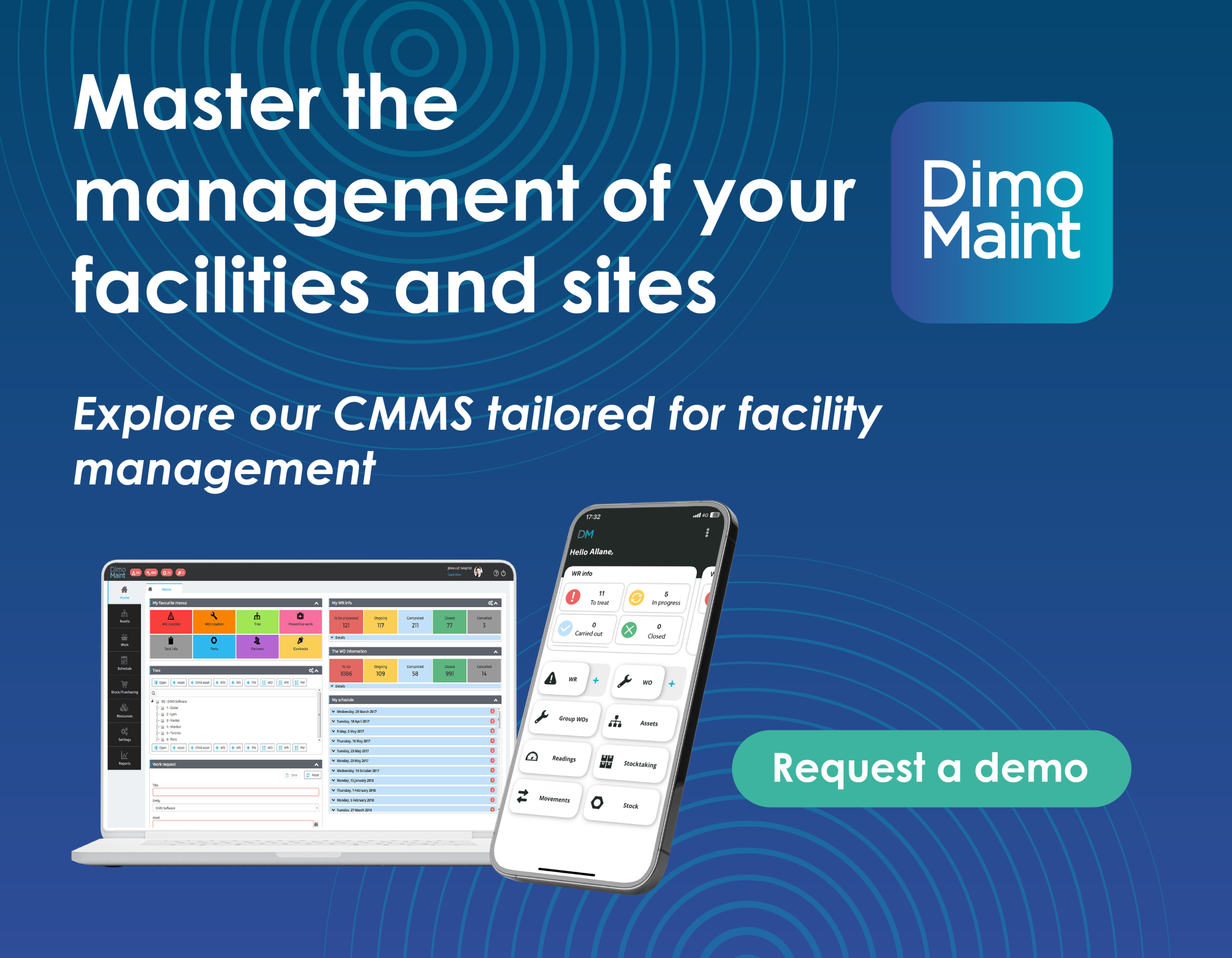
A solution like DimoMaint FM enables seamless connectivity between field and office, ensuring efficient and data-driven operations.
FAQ: Mobile CAFM Applications
Why are mobile apps important in facility management?
Mobile apps allow real-time access to data, improve communication, and enable teams to manage tasks directly in the field.
What are the benefits of mobile CAFM solutions?
They improve efficiency, reduce paperwork, enhance collaboration, and provide better visibility into operations.
How do mobile apps improve maintenance management?
They allow technicians to receive, update, and close work orders in real time, reducing delays and improving data accuracy.
Can mobile CAFM apps improve asset management?
Yes, they provide real-time access to asset data and maintenance history, improving tracking and decision-making.
What is the link between CAFM and CMMS?
CAFM manages facility operations globally, while CMMS focuses on maintenance. Mobile apps connect both systems for seamless execution.